
Flame-retardant hot air cotton can be classified by material as follows:
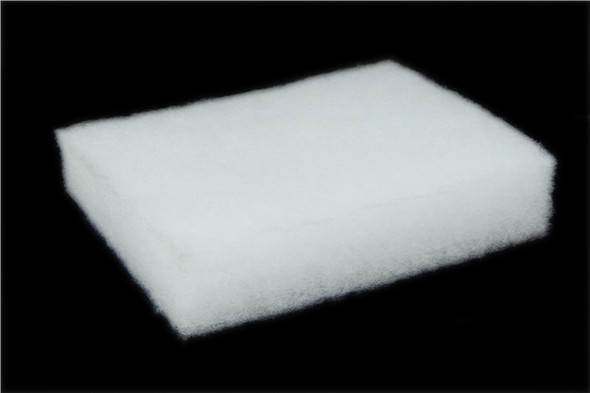
(I) Based on its main components, it can be divided into three main categories: polyester flame-retardant nonwoven fabric, polypropylene flame-retardant nonwoven fabric, and viscose flame-retardant nonwoven fabric.
1. Polyester flame-retardant hot air cotton is mainly composed of polyester. Polyester fiber is a chemical fiber, a polymer of terephthalic acid or diethyl terephthalate and ethylene glycol.
Features: High strength, good elasticity, good heat resistance, smooth surface, good wear resistance, good light resistance, corrosion resistance, poor dyeability.
2. Polypropylene fiber is a synthetic fiber made from propylene.
Features: High strength, good wet and dry strength, good wear resistance, corrosion resistance.
3. Viscose fiber belongs to regenerated cellulose fiber.
Features: Good moisture absorption, lower breaking strength than cotton, environmentally friendly, non-toxic.
(2) Flame-retardant hot air cotton can be classified by process into flame-retardant needle-knitted cotton and flame-retardant hot air cotton. Flame-retardant needle-punched cotton is made from entangled fibers after being punctured by a needle punch.
Flame-retardant hot air cotton is mainly formed by the dispersion of hot air behind the furnace.
Both products have their own characteristics, commonly including flame retardancy, lightweight, warmth retention, durability, and environmental friendliness.
Product Advantages:
Hot Air Cotton
1. Pure white, soft to the touch, excellent elasticity, and good moisture absorption.
2. Made with natural flame-retardant fibers, no dripping. Permanent self-extinguishing effect.
3. Forms a dense carbonized layer during combustion. Low carbon monoxide and carbon dioxide content, only a small amount of non-toxic smoke.
4. Resistant to acids and alkalis, non-toxic, and does not produce any chemical reactions. This product is biodegradable and environmentally friendly.

Send Inquiry




Copyright © 2025 Dongguan Bestech Textile Technology Co., Ltd. All Rights Reserved.